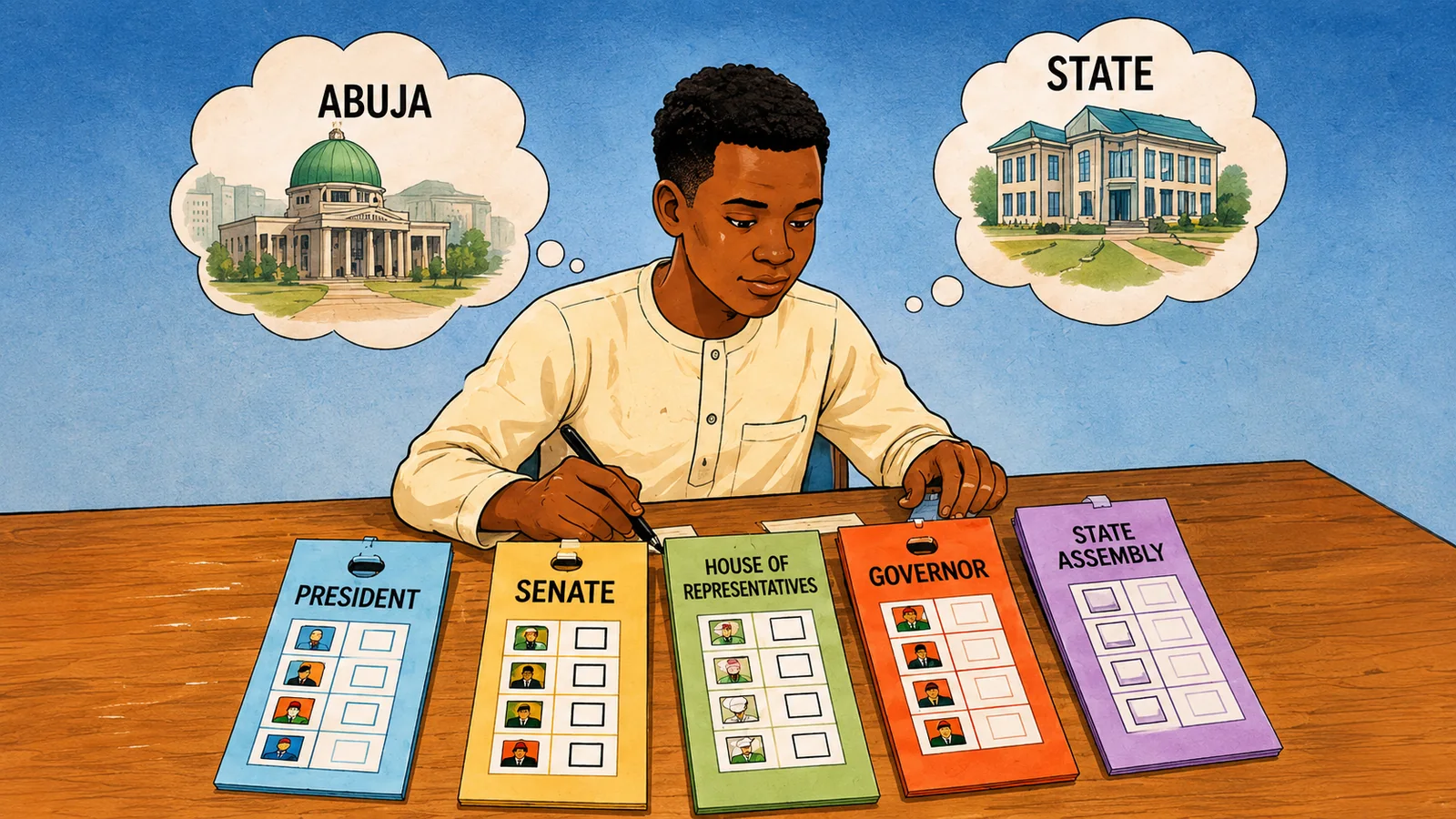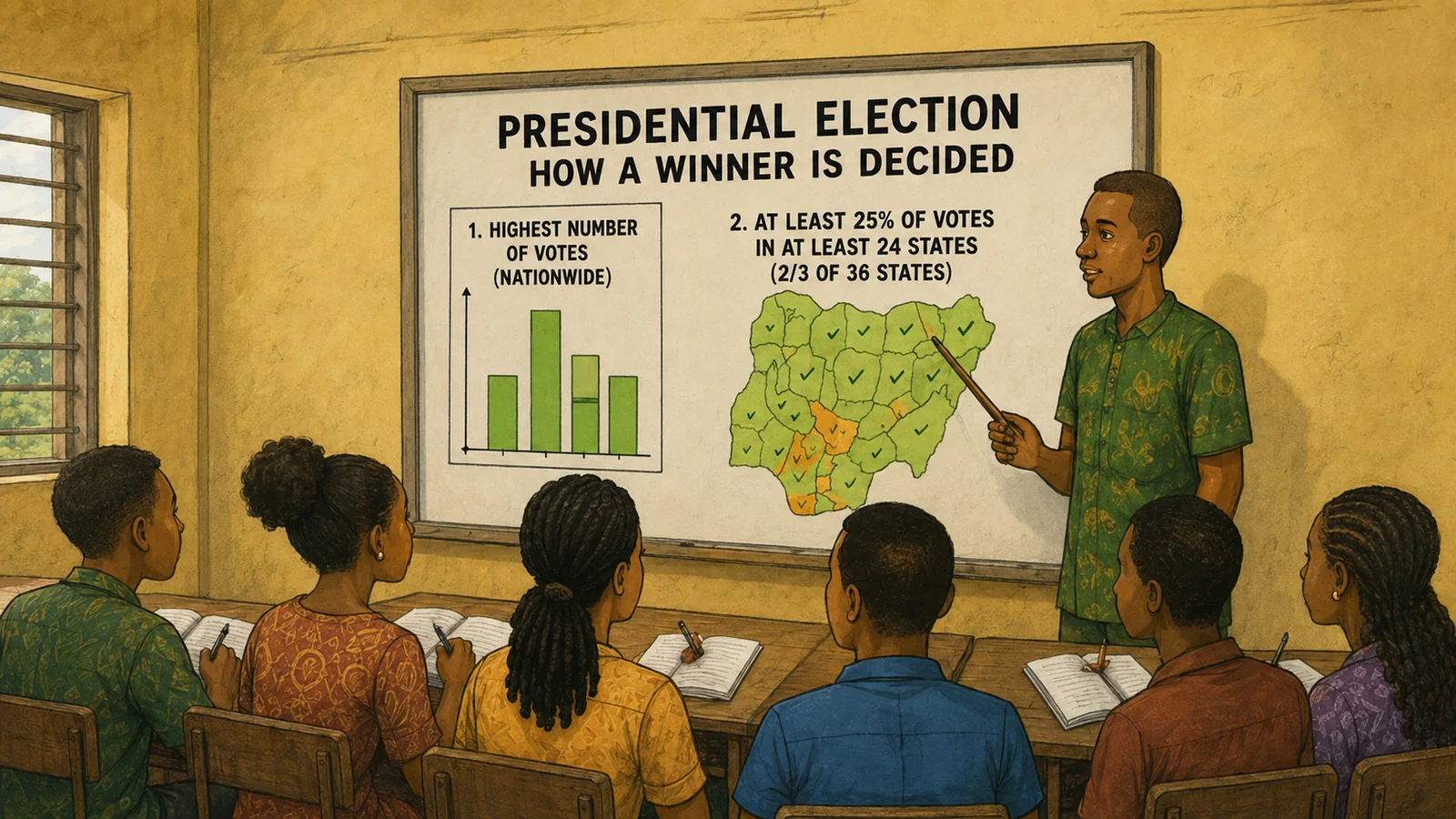
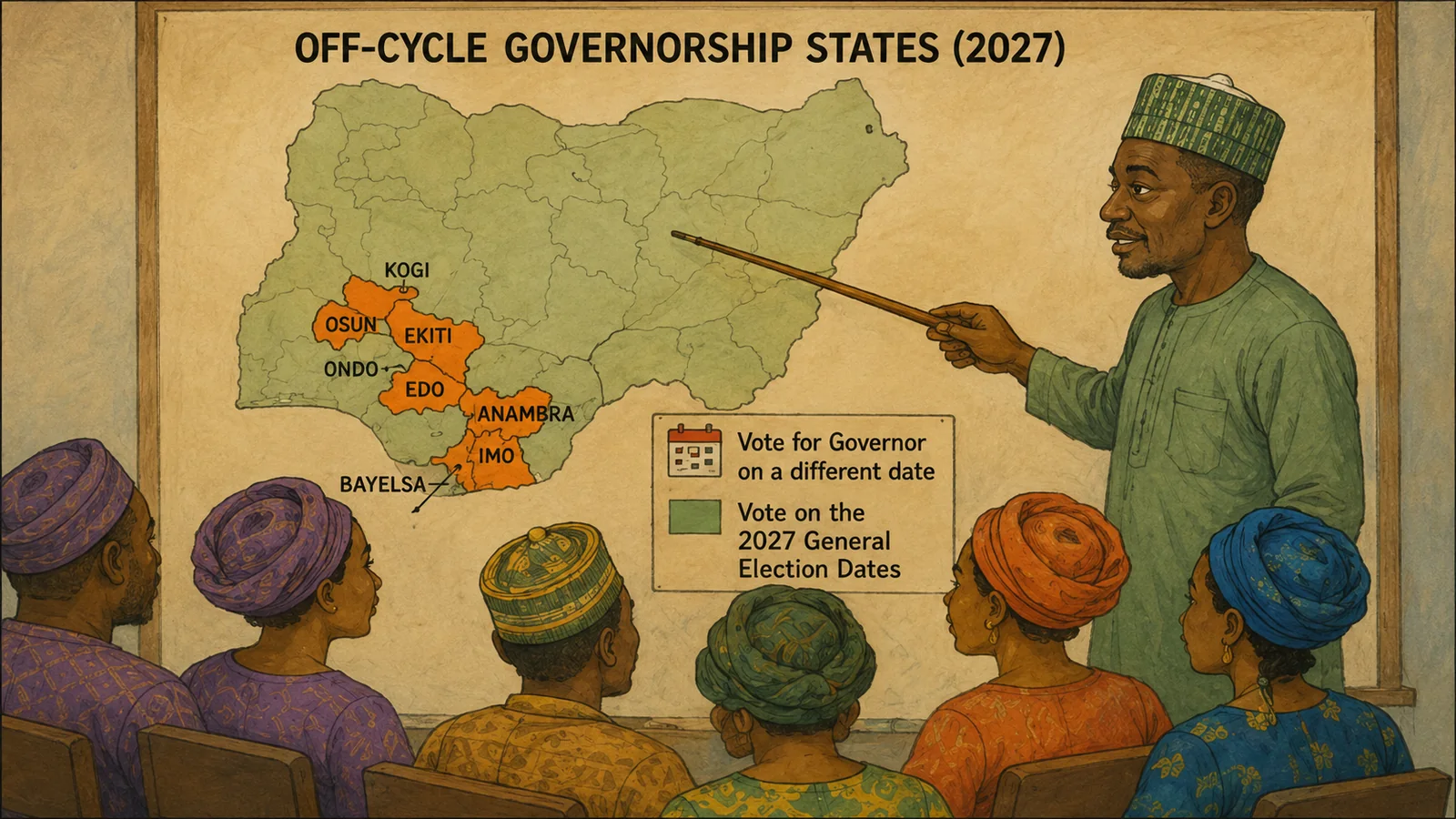
If you live in Anambra, Bayelsa, Edo, Ekiti, Imo, Kogi, Ondo, or Osun, your state will not elect a governor alongside most other states during the 2027 general election. That is not an omission. These eight states have off-cycle governorship elections.
The Short Explanation
INEC's current 2027 election calendar lists the presidential and National Assembly elections for 16 January 2027 and the governorship and State House of Assembly elections for 6 February 2027. But INEC's notice excludes those eight states from the 2027 governorship contest because their governors are elected on separate state-specific calendars.
Residents of the eight states still take part in the federal elections and the State House of Assembly election on the national dates. The difference is simply that governor is not one of their 6 February 2027 contests.
Why These States Became Off-Cycle
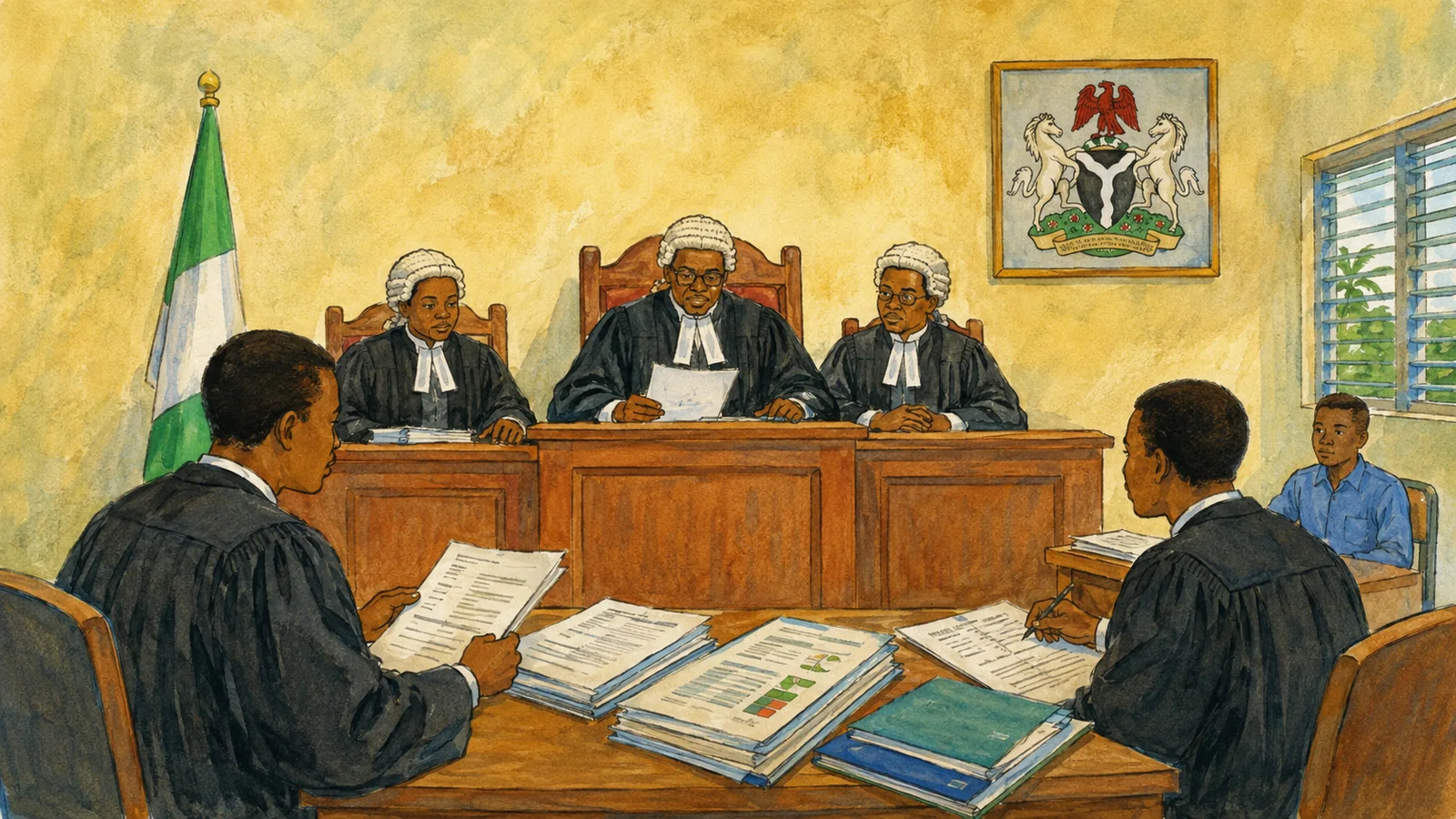
The key historical reason is court litigation that changed when a valid four-year governorship term began.
Nigeria originally had a much more synchronized governorship calendar. But in a number of states, disputed elections were annulled, rerun, or overturned in court. When a different candidate was eventually sworn in after a judgment—or a valid election took place later than the original general-election date—the state's four-year governorship timetable shifted away from the national cycle.
That distinction matters because an ordinary death, resignation, or impeachment does not automatically create a brand-new four-year term and a new election calendar. Nigeria's Constitution has succession rules for those situations. The eight modern off-cycle calendars are principally associated with election disputes and court decisions that altered the start of the relevant governorship term.
How It Happened in the Eight States
The details differ from state to state, but the pattern is similar:
- Anambra: the dispute over the 2003 governorship election eventually led to Peter Obi being sworn in in 2006. Litigation over when his four-year tenure should run helped establish the state's separate election timetable.
- Bayelsa: the 2007 governorship election was annulled and a rerun took place in 2008, pushing the state's valid electoral cycle away from the original general-election timetable.
- Edo: the 2007 result was successfully challenged and Adams Oshiomhole was sworn in in November 2008, shifting the state's subsequent governorship calendar.
- Ekiti: litigation arising from the 2007 governorship contest eventually resulted in Kayode Fayemi taking office in October 2010, creating a different four-year timetable.
- Kogi: litigation and a rerun arising from the 2007 election moved the state's governorship cycle away from the national date.
- Ondo: after a successful challenge to the 2007 result, Olusegun Mimiko was sworn in in February 2009, shifting the state's cycle.
- Osun: a Court of Appeal judgment in 2010 installed Rauf Aregbesola following the disputed 2007 election, moving Osun onto an off-cycle timetable.
- Imo: in January 2020, the Supreme Court set aside the declared result of the 2019 governorship election and declared Hope Uzodimma winner. The resulting tenure timetable put Imo's governorship election on a different cycle from most states.
The exact litigation history is complicated in some of these states, but the common thread is much clearer than the old explanation of "death, resignation or impeachment": court decisions changed when the constitutionally recognised governorship term began.
What This Means for Voters in 2027
If you are registered in one of the eight off-cycle states:
- On 16 January 2027, you can still vote in the presidential, Senate, and House of Representatives elections that apply to your constituency.
- On 6 February 2027, you can still vote in the State House of Assembly election that applies to your constituency.
- You will not vote for governor on 6 February, because your state's governorship election follows its own separate timetable.
Do not interpret the missing governorship contest as a problem with your ballot or registration.
When Is My State's Next Governorship Election?
There is no single shared "off-cycle election day" for all eight states. Each state has its own timetable based on its existing term and INEC's formal election notice.
The safest approach is to check INEC's upcoming-election notices for your particular state rather than trying to calculate the date from memory. Court decisions, legal changes, or a fresh election dispute can also affect a future timetable.
Can a State Ever Return to the National Cycle?
In principle, an election calendar can change if later legal events alter when a valid term begins. But there is no automatic mechanism that periodically pulls an off-cycle state back into the general-election calendar.
For voters, it is better to think of the current timetable as state-specific until INEC and the law say otherwise, rather than assuming the state will eventually "sync back" on its own.
Does Off-Cycle Status Affect the Presidential Election?
No. Off-cycle status relates to the governorship election, not your federal voting rights. A voter in Anambra or Osun participates in the presidential and relevant National Assembly contests under the same nationwide framework as a voter in Lagos, Kano, or any other state.
Why This Matters for TryVote Users
It also explains why a realistic 2027 voting simulation should not present a governorship ballot to voters from these eight states for the February 2027 general-election round. Their state-level governor choices belong to their separate off-cycle elections.
The Bottom Line
Anambra, Bayelsa, Edo, Ekiti, Imo, Kogi, Ondo, and Osun do not elect governors during the 2027 general-election governorship round because past court decisions and election disputes shifted the start of their valid governorship terms, creating separate four-year calendars.
They still participate in the other 2027 elections that apply to them. The missing governorship race is deliberate, not a mistake.
Last reviewed: 21 August 2026. Election dates, registration windows and polling procedures can change. Check INEC's official channels for the latest notice before acting.