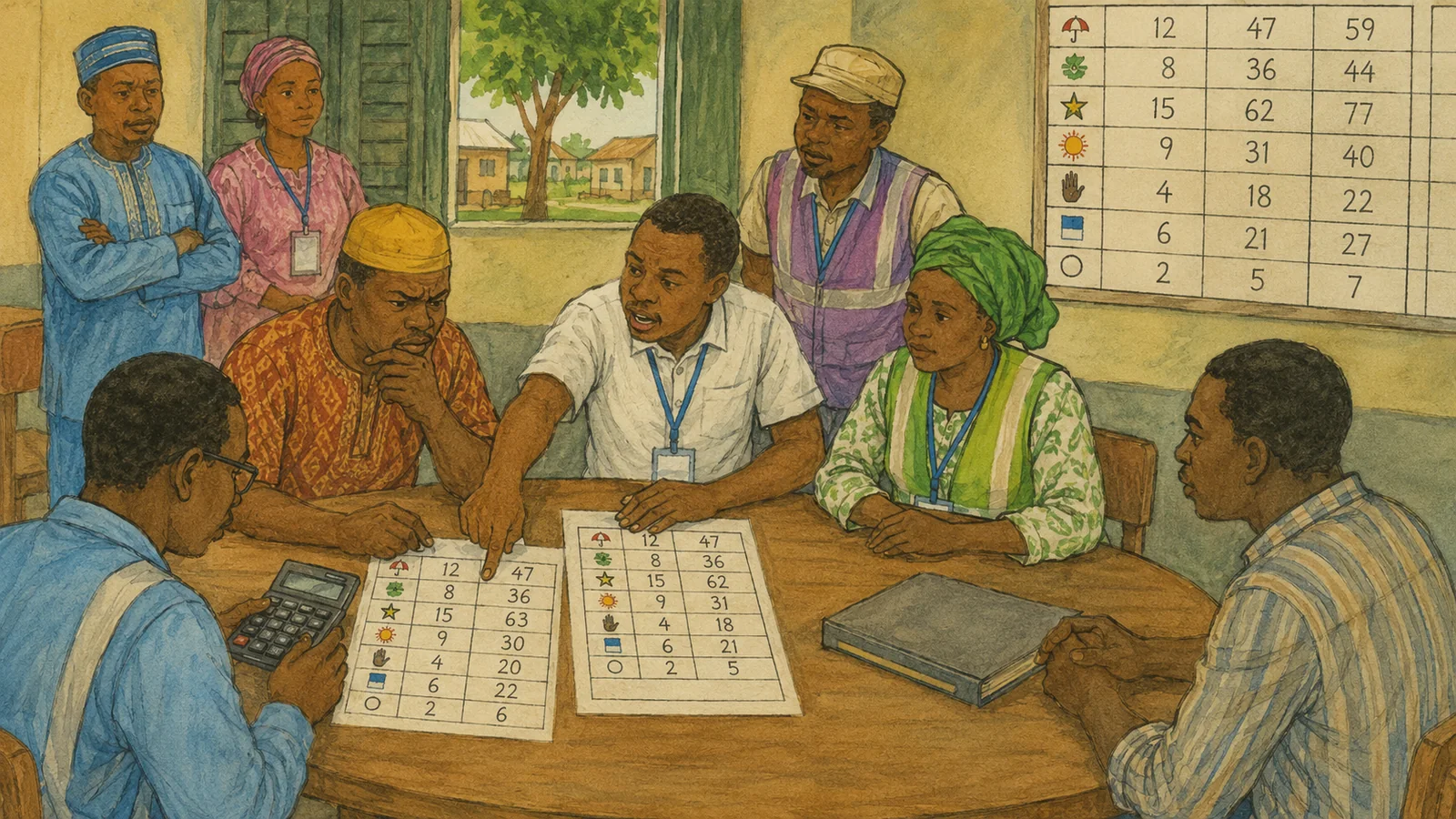
Most Nigerians know that winning the presidency takes more than just getting the most votes nationally — but the exact mechanics of that extra requirement, and the genuine legal controversy around one part of it, are worth understanding properly before the 2027 election, especially if the race is close.
The Basic Constitutional Requirement
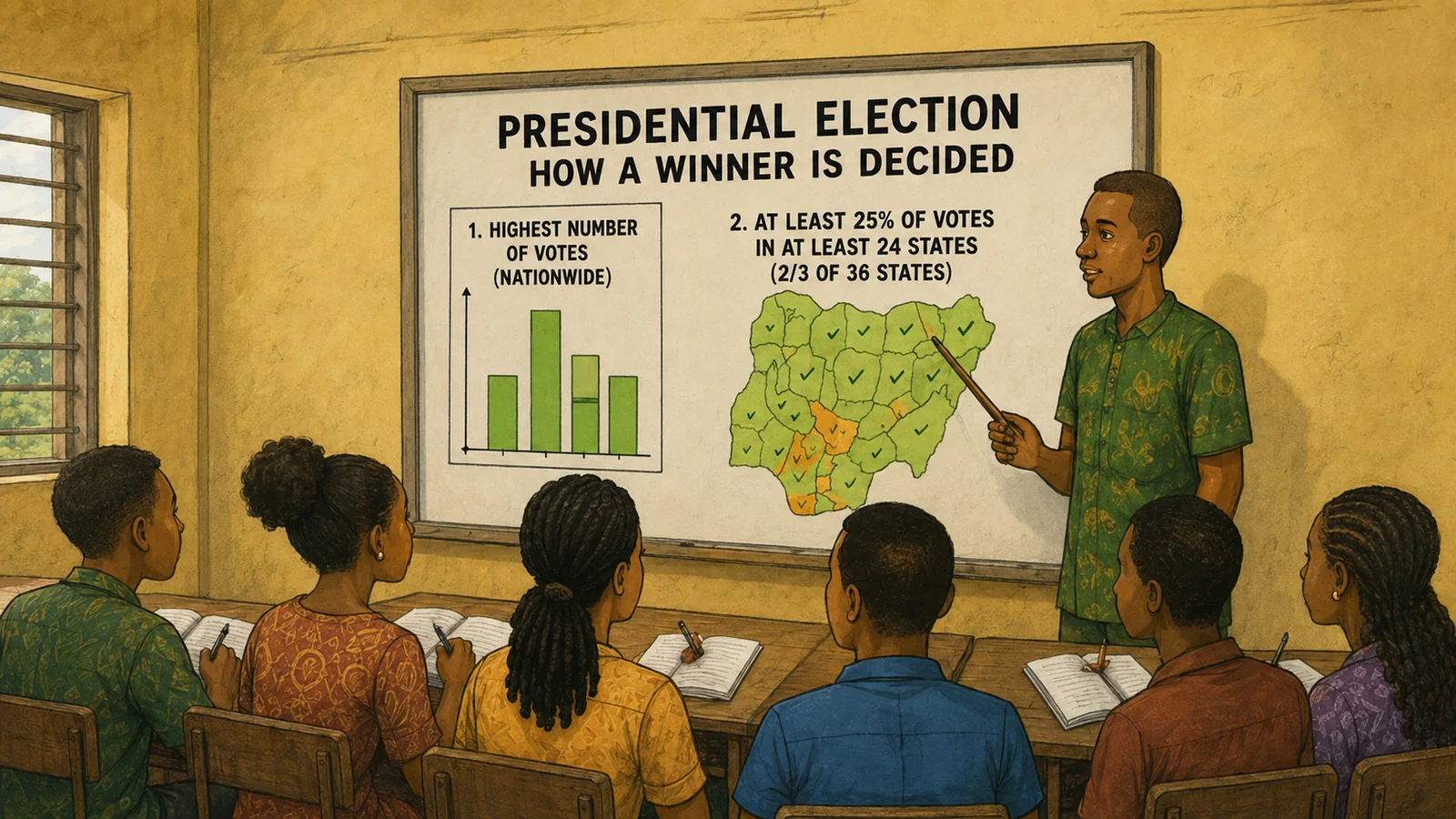
Nigeria's presidential election is not decided by national vote total alone. Section 134 of the Constitution requires the successful candidate to satisfy both a national vote requirement and a geographic-spread requirement.
In simplified terms, a candidate must:
- have the highest number of votes cast; and
- meet the Constitution's one-quarter-of-the-votes spread requirement across at least two-thirds of the units described in Section 134(2)(b), which refers to the states of the federation and the Federal Capital Territory.
You will often hear this shortened in political conversation to the "25% rule." That shorthand is useful, but the constitutional wording matters—especially when people start arguing about whether Abuja has a special status.
The Part That Actually Gets Disputed: Does the FCT Count Separately?
The major modern dispute is whether a candidate must obtain at least 25% specifically in the FCT, in addition to satisfying the broader geographic-spread requirement.
That argument became central after the 2023 presidential election because Bola Tinubu was declared winner without reaching 25% in the FCT.
The Supreme Court rejected the argument that Abuja is a special mandatory 25% hurdle that must be cleared separately before anyone can be elected president. The Court treated the FCT as not having a special electoral veto over the rest of the federation for this purpose.
That is the operative legal position going into 2027 unless the constitutional text is amended or a later binding decision changes the interpretation.
How This Actually Played Out in 2023
After the 2023 result, opponents argued that the phrase "and the Federal Capital Territory" meant the winner needed 25% in Abuja itself. The presidential election petitions ultimately reached the Supreme Court.
The Court upheld the election and rejected the interpretation that failure to reach 25% in the FCT, by itself, prevented a candidate who otherwise met the constitutional requirements from being declared elected.
That does not mean every debate about the arithmetic wording of Section 134 has disappeared. Lawyers and commentators may still disagree about how best to describe the formula. But for a voter trying to understand the practical rule for 2027, the most important point is clear: the Supreme Court has not treated 25% in the FCT as a separate compulsory box.
What This Means Practically for 2027
When following the 2027 presidential count, watch two things at the same time:
- who has the highest national vote total; and
- whether the leading candidate has achieved the geographic spread required by Section 134.
Do not treat "winning Abuja" or "getting 25% in Abuja" as an additional standalone constitutional veto. The 2023 Supreme Court decision is the current binding reference point on that argument.
What Happens If No Candidate Meets the Threshold?
The Constitution anticipates the possibility that no candidate satisfies the required national-vote and geographic-spread conditions at the first election. In that situation, Section 134 provides for a second election involving candidates selected under the constitutional formula, rather than simply declaring the national vote leader regardless of spread.
Because Nigeria has not yet had to use this presidential second-election mechanism in practice, avoid reducing it to the casual phrase "the top two automatically go to a runoff." The Constitution contains specific rules for identifying the candidates who advance. If this becomes relevant in 2027, INEC's formal notice and the constitutional text should be the reference points.
Why This Rule Exists at All
Nigeria's ethnic, regional, and religious diversity is exactly why this threshold was written into the Constitution in the first place. A purely national popular-vote system could theoretically produce a president who dominates in one or two regions while having minimal support elsewhere — which is precisely the outcome the framers wanted to prevent. Requiring broad geographic spread, not just raw vote totals, is meant to push presidential candidates toward campaigns and coalitions that extend well beyond their home region.
Why This Rule Rarely Gets Attention Until It's Close
In elections with a clear, comfortable winner, this entire threshold barely registers in public conversation — the winning candidate typically clears both the plurality and the constitutional geographic-spread requirement, and nobody scrutinises the geographic breakdown closely. It's only in genuinely close, competitive elections, with several strong regional candidates splitting the vote in different ways, that this rule becomes central to the outcome — which is exactly what happened in 2023 and is worth watching for again if 2027 shapes up to be similarly contested. If you're following election night coverage in 2027, keep an eye not just on the national vote total, but on how many states each leading candidate is actually clearing 25% in — that number often matters as much as who's ahead overall.
The Bottom Line
Nigeria's presidency is designed to require both national plurality and broad geographic support. That is why a candidate can lead the national vote and still have to satisfy a separate spread test.
The FCT question generated major controversy in 2023, but the Supreme Court rejected the claim that a presidential candidate must independently obtain 25% in Abuja as a special mandatory condition. That is the legal position voters should use when interpreting the 2027 race unless the law changes.
Last reviewed: 21 August 2026. Election dates, registration windows and polling procedures can change. Check INEC's official channels for the latest notice before acting.