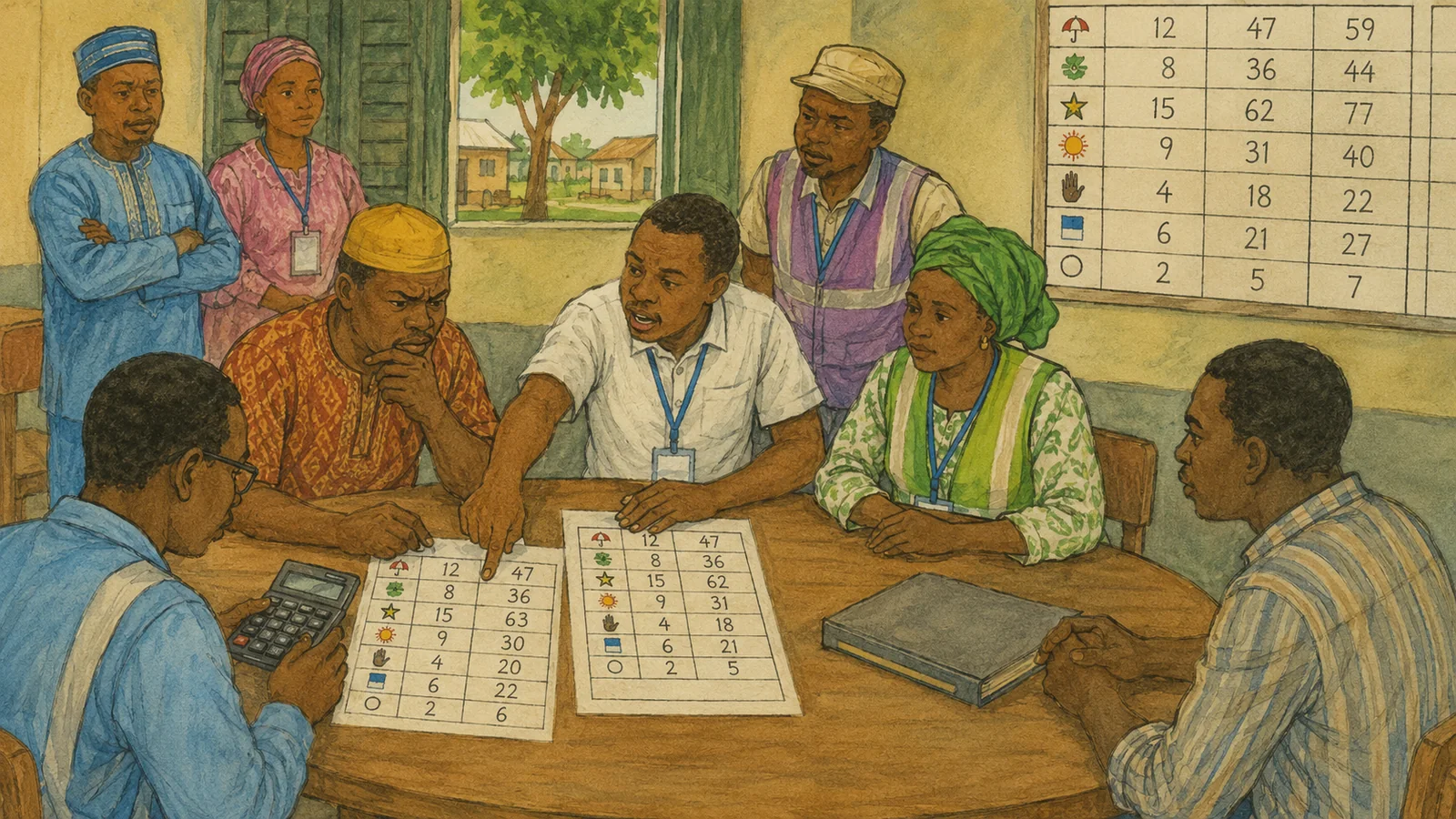

Nigeria's election-petition system is a formal court process, not a general complaints desk. A candidate or political party that wants a declared election result set aside has to use the grounds, forum, evidence rules, and strict deadlines provided by the Constitution and the Electoral Act 2026.
The 2026 Act also made a major change: it narrowed the statutory grounds on which an election result can be challenged after the election.
What an Election Petition Actually Is
An election petition is a legal proceeding challenging the return made after an election. Under Section 137 of the Electoral Act 2026, the persons who may present a petition are a candidate who participated in the election or a political party that participated in the election.
That means an ordinary voter, observer group, journalist, or civil-society organisation cannot personally file an election petition just because they believe something went wrong. They can report, document, preserve evidence, or support public scrutiny, but the formal petition has to come from a legally entitled candidate or party.
The Two Grounds Under the Electoral Act 2026
Section 138 now provides two principal grounds for questioning an election:
- The election was invalid by reason of corrupt practices or non-compliance with the provisions of the Act.
- The respondent was not duly elected by a majority of lawful votes cast at the election.
The 2022 Act had included candidate qualification as a separate post-election ground. That ground was removed from Section 138 in the 2026 Act, pushing qualification disputes toward the pre-election legal process instead.
What Happened to the Challenge Against Section 138?
This article originally described a constitutional challenge to Section 138 as still pending. That is no longer current.
On 4 August 2026, the Federal High Court in Abuja dismissed a suit brought by the National Democratic Congress (NDC) challenging Section 138 and other provisions of the Electoral Act 2026. The court held that Section 138 did not conflict with the Constitution and said candidate-qualification disputes could be pursued at the pre-election stage.
That decision is an important part of the legal position as of 21 August 2026. Like any litigation, later appeals or new judgments could change the picture, so this is an area worth rechecking before the 2027 elections.
Why the Qualification Issue Still Matters
Removing qualification as a post-election petition ground changes when lawyers have to attack a candidate's eligibility.
A person who believes a candidate does not meet the constitutional or statutory requirements cannot simply assume the issue can be saved for an election petition after results are declared. Qualification disputes have to be handled through the appropriate pre-election route and within the applicable deadlines.
This does not mean candidate qualifications no longer matter. It means the procedural doorway for challenging them is different.
Petitions Outside the Permitted Grounds
The Electoral Act 2026 also attaches financial consequences to petitions brought outside the grounds permitted by Section 138. Because this is a serious procedural area, candidates and parties should rely on election-law counsel rather than treating a social-media interpretation of the Act as filing advice.
For a voter, the important takeaway is simpler: election petitions are not an open-ended opportunity to raise any political complaint after the result. The grounds are deliberately limited.
How IReV and Result Records Can Matter
The Electoral Act 2026 gives electronic transmission of polling-unit results a clearer statutory role. That can make IReV records, transmitted data, and other electronic evidence important in a petition or collation dispute.
But avoid the oversimplification that "IReV always wins" or "the paper form always wins." Section 60 contains a specific rule that where electronic transmission fails because of communication failure and transmission becomes impossible, the signed and stamped Form EC8A remains the primary source for collation and declaration in that situation.
Other disputes can require the court to evaluate the particular result forms, accreditation data, transmitted records, witnesses, and legal burden of proof relevant to the allegation being made.
The Deadlines Are Strict
Election cases operate under constitutional time limits.
A petition must be filed within the constitutionally prescribed period after the result is declared. The Constitution gives an election tribunal 180 days from the filing of the petition to deliver its judgment, while an appeal in an election matter is subject to a 60-day disposal period from the relevant judgment.
Do not turn those numbers into a universal "300-day election case" formula. The number of appellate stages depends on the office being challenged.
The Appeal Route Depends on the Election
The structure is not identical for every office:
- Presidential election: the Court of Appeal has original jurisdiction as the presidential election petition court, with a further appeal to the Supreme Court.
- Governorship election: the petition begins at the Governorship Election Petition Tribunal, with appeals through the Court of Appeal and, under the current constitutional framework, to the Supreme Court.
- National Assembly and State House of Assembly elections: petitions begin at the appropriate election tribunal, and the Court of Appeal is the final appellate court for those legislative election petitions.
That is why a single blanket statement that "every petition goes tribunal → Court of Appeal → Supreme Court" is inaccurate.
What Can a Tribunal or Court Do?
The outcome depends on the case proved. Election litigation can involve questions such as whether unlawful votes affected the declared majority, whether non-compliance was legally significant, whether a return should be set aside, or whether further electoral action is required.
The court does not decide the case based on which allegation trends most strongly online. The petitioner has to plead and prove the case under the applicable election-law rules.
What Ordinary Voters and Observers Can Do
Even though ordinary citizens cannot file an election petition in their own names, they can still matter to the accountability process:
- preserve lawful observations and records;
- report serious incidents through official channels;
- cooperate with accredited observer organisations;
- avoid altering, fabricating, or sensationalising evidence;
- distinguish a documented irregularity from a legal conclusion about whether an election must be invalidated.
That last distinction is especially important. A real problem at one polling unit is not automatically proof that an entire constituency result is legally void.
What This Means Heading Into 2027
The 2027 election-petition framework will be shaped by the narrower Section 138 grounds, the stronger role of electronic result transmission, and continuing litigation over parts of the Electoral Act 2026.
Because courts can still issue new decisions before election day, any article about election petitions should carry a review date and be checked again before the polls.
The Bottom Line
Under the Electoral Act 2026, an election petition is a formal challenge brought by a participating candidate or political party on the grounds allowed by Section 138. Candidate qualification is no longer listed there as a separate post-election ground.
The Federal High Court's 4 August 2026 decision rejected the NDC challenge to that Section 138 framework, although later appellate developments remain possible. Election cases also have strict 180-day and 60-day constitutional time limits, with the appeal path depending on the office involved.
So when you hear that someone will "challenge the result in court," the useful questions are: who has standing, what statutory ground are they relying on, which court has jurisdiction, and are they still within time?
Last reviewed: 21 August 2026. Election dates, registration windows and polling procedures can change. Check INEC's official channels for the latest notice before acting.