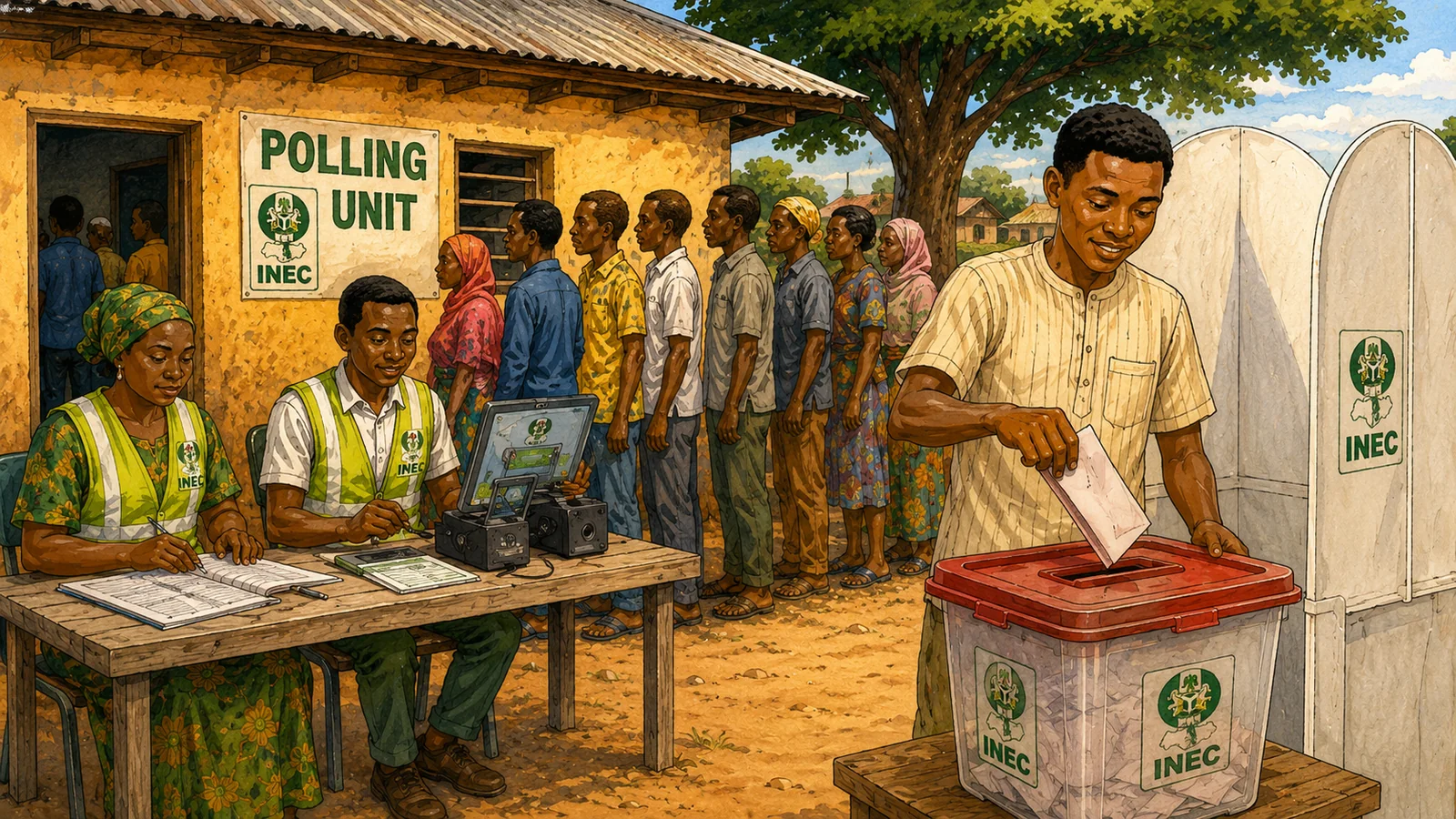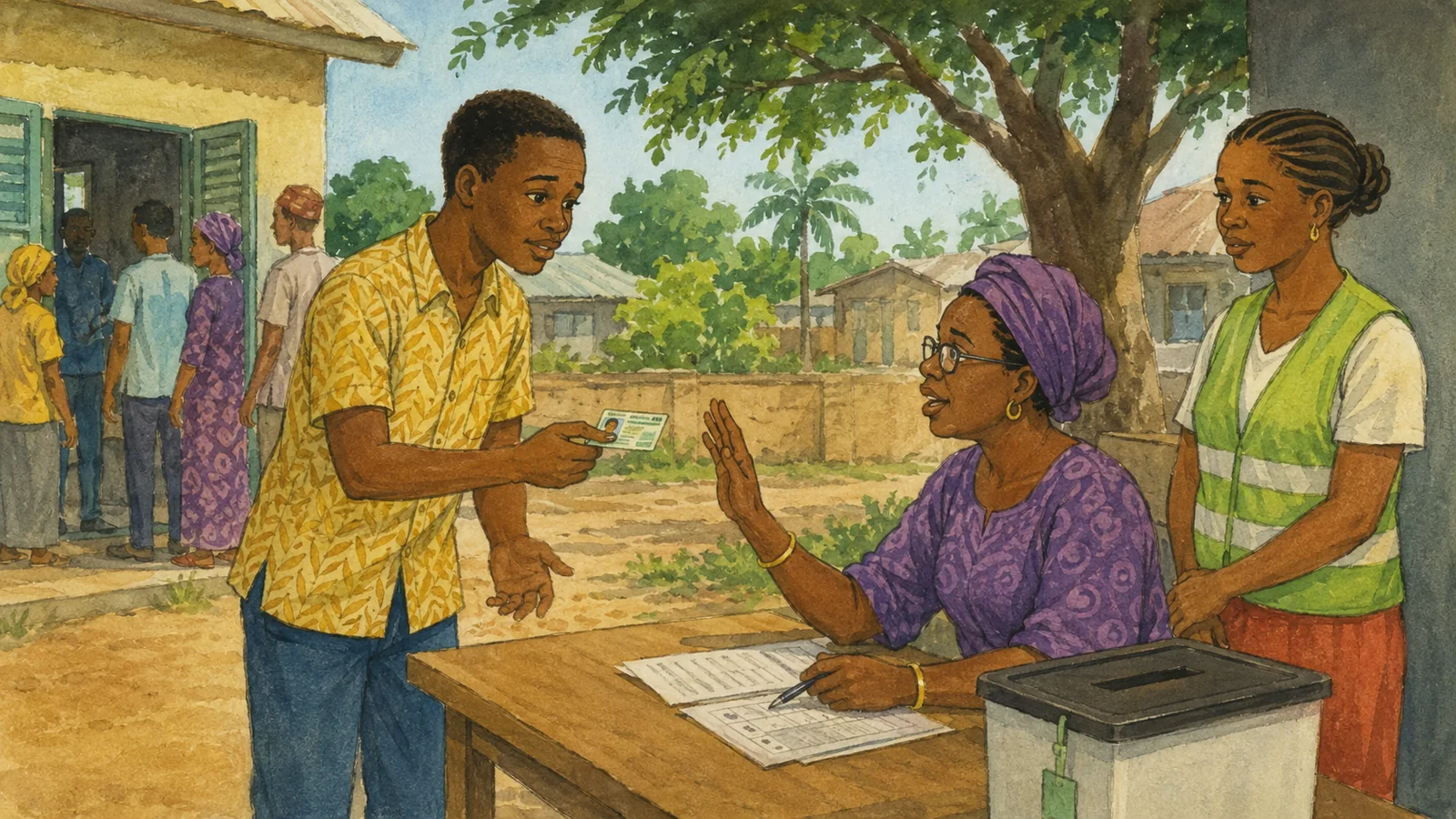
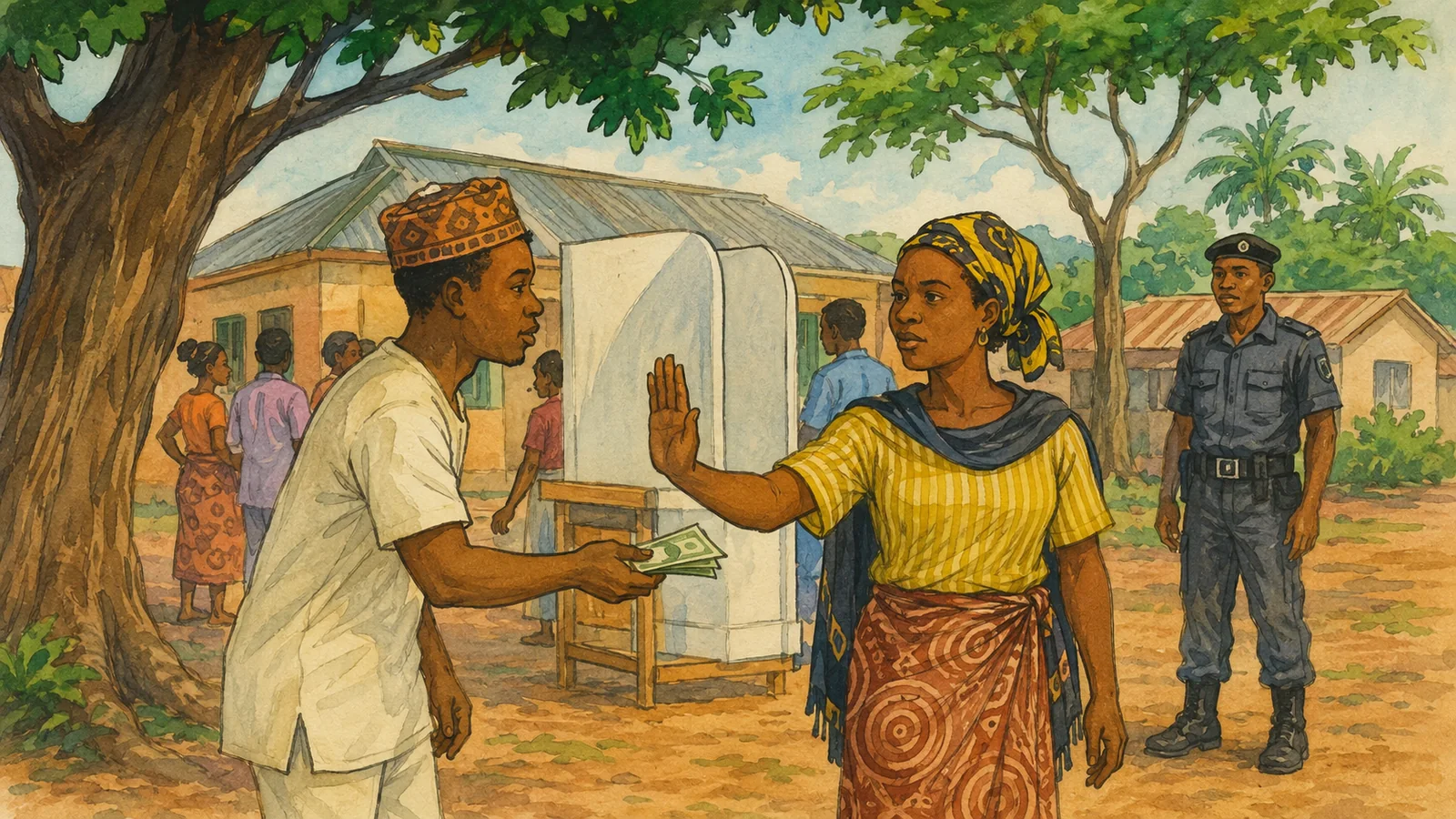
Vote buying has been one of the most persistent problems in Nigerian elections, often happening openly enough that it's treated almost as background noise around polling units. The Electoral Act 2026 responded with dramatically stiffer penalties than existed before — here's exactly what counts as an offence, how serious the consequences now are, and what you can actually do about it.
What Counts as Vote Buying Under the Law
Under Section 22(1) of the Electoral Act 2026, the offence covers a wide range of related conduct, not just a straightforward cash-for-vote handover:
- Being in unlawful possession of someone else's voter's card, even without any exchange of money involved
- Selling or attempting to sell a voter's card
- Buying or offering to buy a voter's card
- Selling or offering to sell votes — meaning your own vote, or influence over how you'll vote
- Buying or offering to buy votes, whether for yourself as a candidate or on behalf of someone else
Notice that both sides of the transaction are covered, and so are attempts, not just completed exchanges. Offering money for a vote is an offence even if the other person refuses; accepting an offer is an offence even if you don't ultimately follow through at the ballot box.
How Severe the Penalties Actually Are Now
The Electoral Act 2026 sharply increased the consequences for offences covered by its voter-card and vote-buying provision. A conviction can attract a fine of not less than ₦5,000,000, imprisonment for a term of not less than two years, or both.
The Act also provides an additional political consequence: a person convicted under the provision is ineligible to stand for an election in Nigeria for at least 10 years.
Because these are statutory penalties, avoid relying on old summaries based on the 2022 Act. The numbers changed materially under the 2026 law.
What Vote Buying Actually Looks Like in Practice
Vote buying is not limited to someone openly handing over cash beside a ballot box. It can involve money, gifts, benefits, promises, or the buying and selling of voter cards or votes in the circumstances covered by the Act.
One familiar scheme involves demanding photographic "proof" of a vote before payment. That is one reason INEC prohibits camera-capable devices inside the voting cubicle and protects ballot secrecy.
But keep the legal concepts separate: taking a prohibited ballot photograph is not automatically the same offence as vote buying under Section 22. A photograph can be part of, or evidence connected to, a vote-buying arrangement; the criminal offence still depends on the conduct covered by the law.
A Related, Even More Serious Offence: Falsifying Results
The 2026 Act also introduced a dramatically stiffer penalty for a related but distinct offence — returning or collation officers who intentionally collate or announce a false result. Under Section 62(9), this now carries a minimum of 10 years' imprisonment, with no option of a fine at all. Unlike the vote-buying provision, a court has no discretion here to substitute a monetary penalty; a conviction means real prison time. This reflects how seriously the new law treats manipulation at the official, institutional level, not just at the retail, cash-for-vote level closer to individual voters.
How to Report Vote Buying If You Witness It
If you witness suspected vote buying, prioritise safety and accurate reporting:
- alert the appropriate election officials or security personnel at the location;
- make accredited observers aware so the incident can be documented independently;
- record the time, location, and factual details you can safely remember;
- use any official INEC or law-enforcement reporting channel announced for that election.
Do not physically confront a suspected buyer or seller if doing so could put you or other voters at risk. Reporting is more useful when it is specific and factual rather than based on rumour or party affiliation.
Why Enforcement Has Historically Been the Weak Point
Nigeria has had vote-buying provisions on the books for years, and the challenge has never really been the existence of a law — it's been consistent enforcement, given how openly and routinely the practice has occurred in some areas. Whether the dramatically higher penalties in the 2026 Act actually translate into more prosecutions and convictions, rather than simply existing as a stronger deterrent on paper, is something that will only become clear as the 2027 cycle plays out and as courts begin applying the new provisions in practice.
Why the Penalty Increase Matters Beyond the Numbers
The jump from a discretionary ceiling to a mandatory floor is a meaningful legal shift, not just a bigger number for headlines. Under the old framework, a judge could hand down a token fine well below ₦500,000 and technically comply with the law. Under the new framework, courts have no room to go easy — the minimum fine alone is ten times higher than the old law's entire ceiling, and the mandatory 10-year election ban applies regardless of whether the court opts for a fine, imprisonment, or both. For anyone with political ambitions, that ban is arguably the more consequential piece: a conviction doesn't just cost money or time, it removes you from electoral contention for a full decade, covering at least two full election cycles.
The Bottom Line
Under the Electoral Act 2026, buying or selling a vote — or even just being caught with someone else's voter's card unlawfully — now carries a minimum ₦5 million fine, a minimum two-year prison term, or both, plus a mandatory 10-year ban from ever contesting an election in Nigeria. That's a substantial jump from the previous law's much lighter ceiling, and it applies to both the person offering money and the person accepting it. If you witness it happening, report it to party agents, observers, or security on the ground rather than staying silent or getting involved yourself.
Last reviewed: 21 August 2026. Election dates, registration windows and polling procedures can change. Check INEC's official channels for the latest notice before acting.