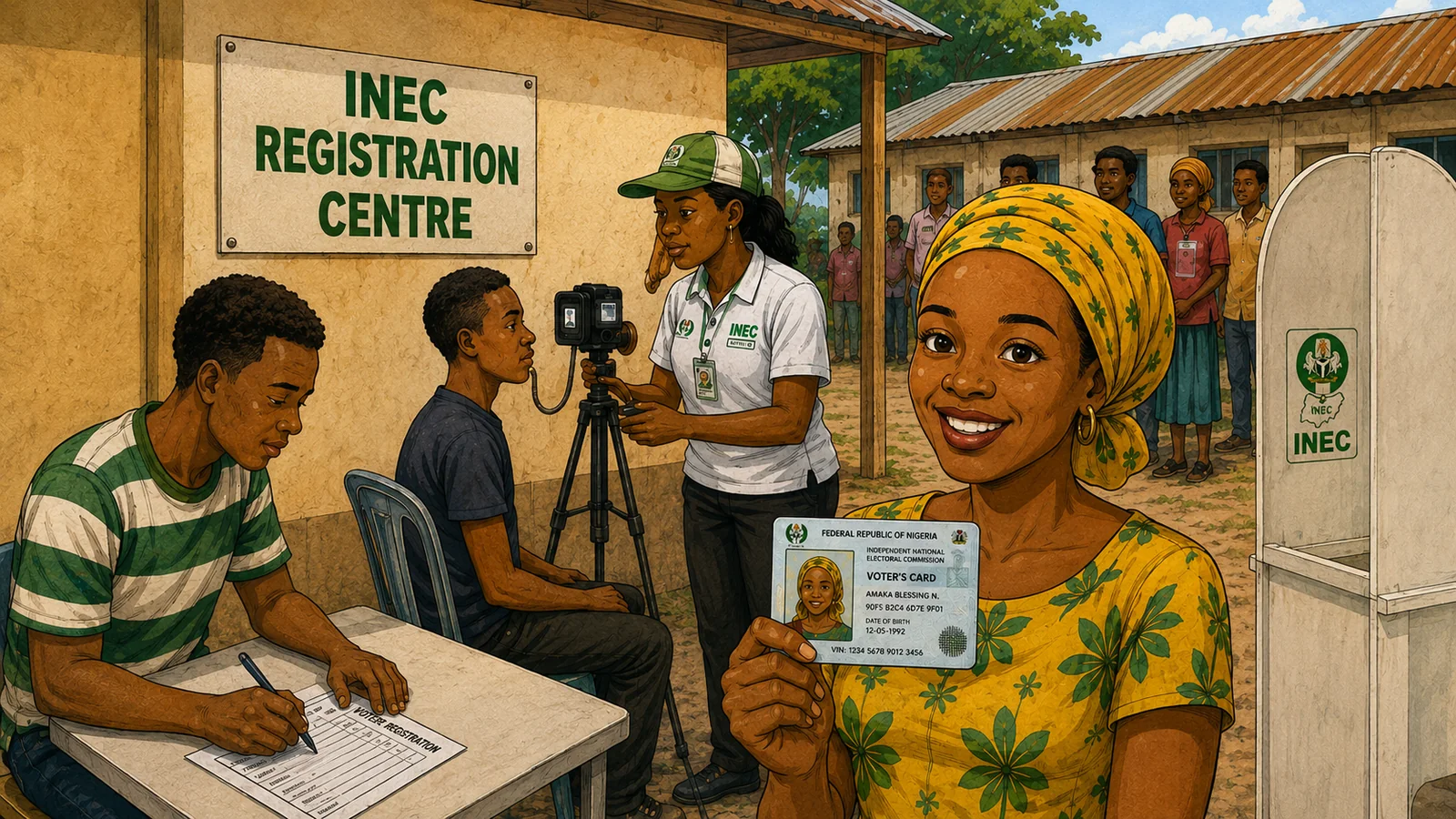
Your Permanent Voter's Card (PVC) is the document INEC requires a registered voter to present for accreditation on election day. The process starts with voter registration, continues through verification and processing, and ends with collecting the physical card.
The important update for 2026 is that INEC's current registration system is no longer accurately described as a single "online form, then everyone must go for physical biometrics" pathway. INEC now provides more than one registration route when CVR is active, including an online registration option and a pre-registration route that leads to biometric capture.
Who Can Register
Under Nigeria's electoral framework, a prospective voter must meet the legal eligibility requirements, including being a Nigerian citizen and at least 18 years old. INEC's registration guidance also ties registration to the area where a person is resident, works, or originates from, subject to the applicable legal rules.
Voter registration and PVC collection are free. If anyone asks you to pay for registration, a faster appointment, preferential treatment, or the release of your PVC, do not treat that as an official INEC fee.
Step 1: Start With INEC's Official CVR Portal
When a CVR window is open, begin at INEC's official Continuous Voter Registration portal. The portal currently presents separate services, including New Voter Online Registration and New Voter Pre-Registration.
That distinction matters:
- Online registration is designed to let an eligible first-time voter complete more of the process digitally, including a self-service biometric component where INEC makes that route available.
- Pre-registration lets a prospective voter enter details online and then complete the required biometric stage through an INEC registration centre or other process directed by the Commission.
Do not assume that an old tutorial from a previous election cycle still describes the current process. Follow the route and instructions shown on INEC's live portal at the time you register.
Step 2: Complete the Registration Route INEC Gives You
Whichever route you choose, the registration is not something to improvise through a third-party website or agent. Complete the steps INEC requires for identity details and biometric enrolment.
INEC's 2026 self-service system includes a Personal Biometric Registration application for eligible first-time voters using the online route. It forms part of the official CVR process rather than operating as an unrelated standalone voter-registration app.
If your selected route requires an in-person visit, attend the authorised centre and complete the biometric capture there. If the portal permits you to complete the biometric stage through the approved self-service route, follow the instructions given by INEC carefully.
Keep any acknowledgement, reference number, temporary document, or confirmation issued at the end of the process.
Step 3: Confirm That Your Registration Is on Record
After registration, INEC has to process the record and remove duplicate or otherwise invalid registrations before the final voter register is used.
Do not register again simply because you are impatient or cannot immediately find your record. Duplicate registration can create serious problems for the record you already have.
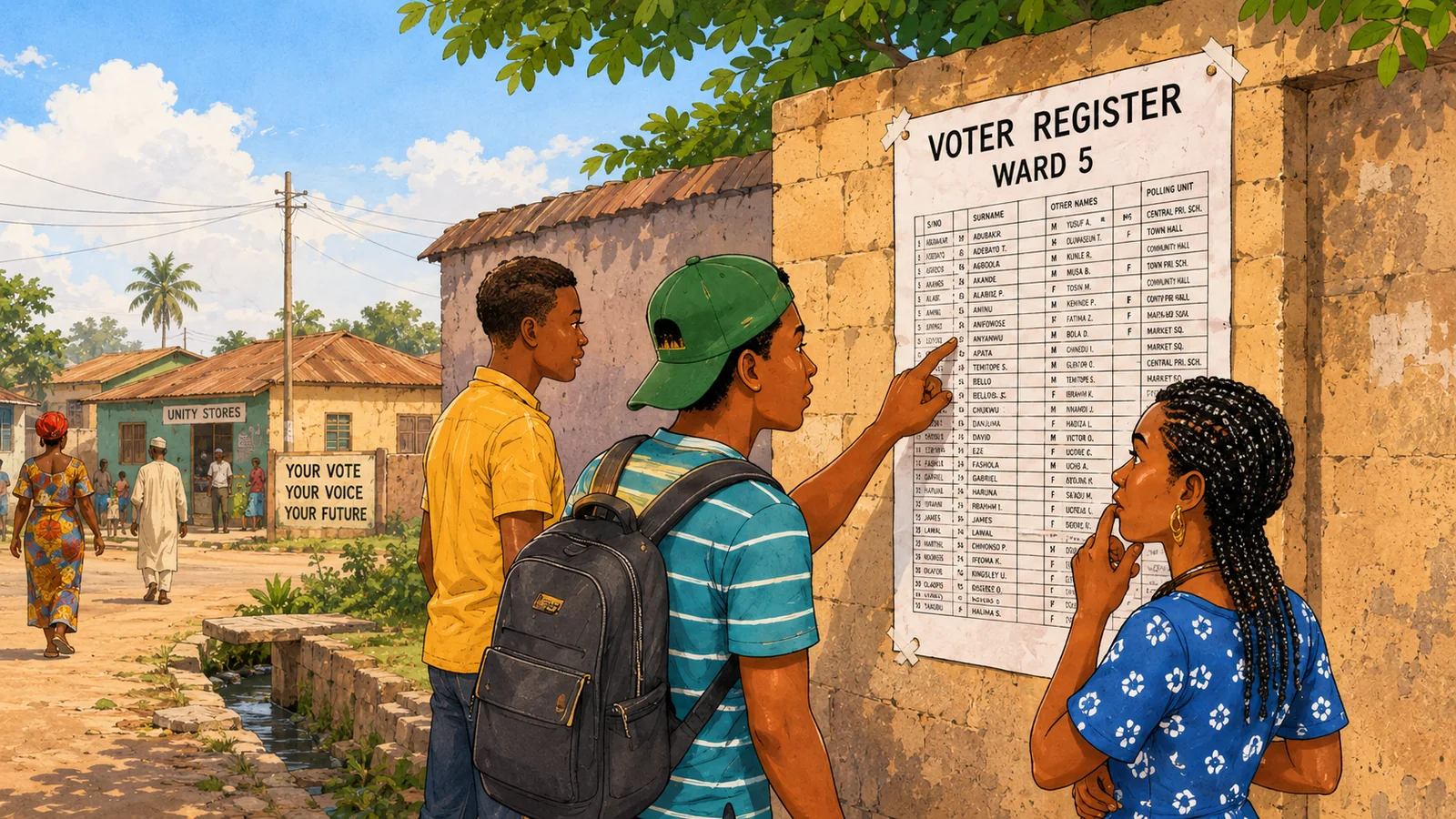
INEC's Voter Verification Service currently allows searches by VIN or by name and date of birth. Use the official verification tool rather than assuming that a social-media screenshot, unofficial portal, or third-party database proves your registration status.
Step 4: Check Your PVC Status and Collection Information
Once your registration has been processed, keep checking INEC's official CVR services and announcements for PVC status and collection information.
The exact collection arrangement can vary by election, state, and stage of distribution. INEC may announce ward-level, LGA-level, or other designated collection centres, but you should use the current notice for your own location rather than assuming the timetable from another state applies to you.
Step 5: Collect Your PVC Yourself
PVC collection is personal. You should plan to collect your own card from the location INEC designates for you and follow the identification or acknowledgement instructions stated in the collection notice.
Do not hand money to anyone who claims they can "release" your card faster, collect it on your behalf, or move it to a preferred polling unit outside the official process.
Once you receive the PVC, check the details and keep it somewhere secure. The card is tied to the voter record and polling unit where you are registered.
If Your Card Is Lost, Damaged, or Your Details Need Changing
Replacement of a lost or damaged PVC, correction of registration details, and transfer to another polling unit are handled through INEC's voter-registration services when the relevant window or service is available.
If the service you need is currently closed, there is no safe unofficial shortcut. Monitor INEC's official channels and act as soon as the Commission opens the relevant service again.
If you have moved, remember that moving house does not automatically move your polling unit. Until an approved transfer is completed, your voter record remains tied to the polling unit on your registration.
Common Mistakes to Avoid
- Registering more than once. Check your existing record before attempting a fresh registration.
- Using unofficial registration links. Start with INEC's own website and portal.
- Assuming the process is unchanged from 2023 or an earlier cycle. INEC introduced new online/self-service options in 2026.
- Ignoring your acknowledgement details. Keep any reference number or document you receive.
- Waiting until the final days of a registration or collection exercise. Earlier is usually easier.
- Paying someone for a free INEC service. Registration and PVC collection should not depend on an unofficial fee.
What If You Registered Years Ago and Never Collected Your Card?
Do not automatically start a new registration. First check whether your existing voter record is still on the register and ask INEC about the status of the uncollected PVC.
An old registration can still matter, and registering again without checking first can create a duplicate-registration problem. Use the Voter Verification Service and, if necessary, contact the relevant INEC state or LGA office for guidance.
A Note on the Current 2027 Registration Window
As of 21 August 2026, INEC's CVR portal states that the registration exercise is not currently active. If you already registered, focus on verifying your record and following PVC collection information. If you did not register, only a new official INEC announcement can reopen that opportunity for this election cycle.
When the next CVR window opens—whether before or after the 2027 elections—use the live INEC portal itself to determine which registration route is available to you. The technology and procedures can change, so an old step-by-step guide should never outrank the Commission's current instructions.
The Bottom Line
Getting a PVC is not one single action. You first have to become a valid registered voter through an INEC-approved route, confirm that your record is on the register, wait for PVC processing and distribution, and then collect your card through the official channel.
For the current 2027 cycle, registration is closed. If you are already registered, your priority now is verification and collection, not registering again.
Last reviewed: 21 August 2026. Election dates, registration windows and polling procedures can change. Check INEC's official channels for the latest notice before acting.